Wind blowing across a microphone tends to make a horrible noise, will often overdrive the signal until it clips, and strong-enough wind can damage the microphone element (whether that be a strong breeze, the effects of rapidly moving a microphone about, or a person's breath).
NB: Never test microphones by blowing into them, you risk wind-caused damage or filling them with spit. Likewise with banging on the end—you can cause damage through air-pressure, or physical shock. Test by speaking into them, or gently running a finger over the microphone.
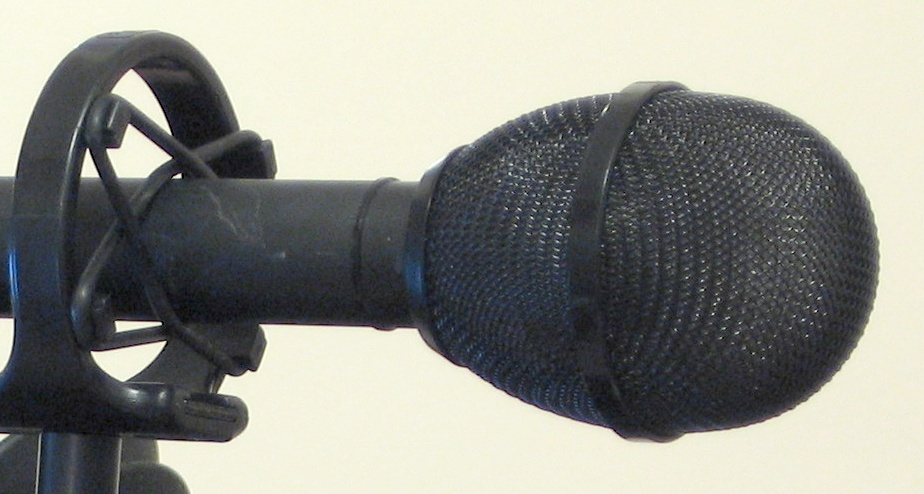
To protect against wind problems, it's advisable to use some sort of filter. The cheapest and simplest is a foam ball, but they can muffle the sound a bit, and they eventually disintegrate and contaminate the microphone. Better wind filters are typically a combination of some thin material that blocks most wind, but passes most sound through without colouration, and a grille that keeps it in shape. The windscreen that you can see on the, above, picture of the Nakamichi microphone has an outer mesh grille (that mainly provides physical protection), with an inner lining that's a mesh made out of a finely weaved metal (about two or three times as dense as a tea strainer).
Better still are the “blimps” that you'll often see news crews using. They have quite a bit of space inside them between the mike and the cage (this helps with reducing wind problems), and tend to have a variety of things to help you handle the kit (e.g. the microphone will be mounted in a shockmount, the whole thing will be mounted on a boom pole or have a pistol-grip).
Wind filters can help prevent someone “popping” a microphone, though that's really best avoided by talking into microphones better (i.e. talk past them, not directly into them when you're very close to the microphone).